Wednesday, 13 March 2013

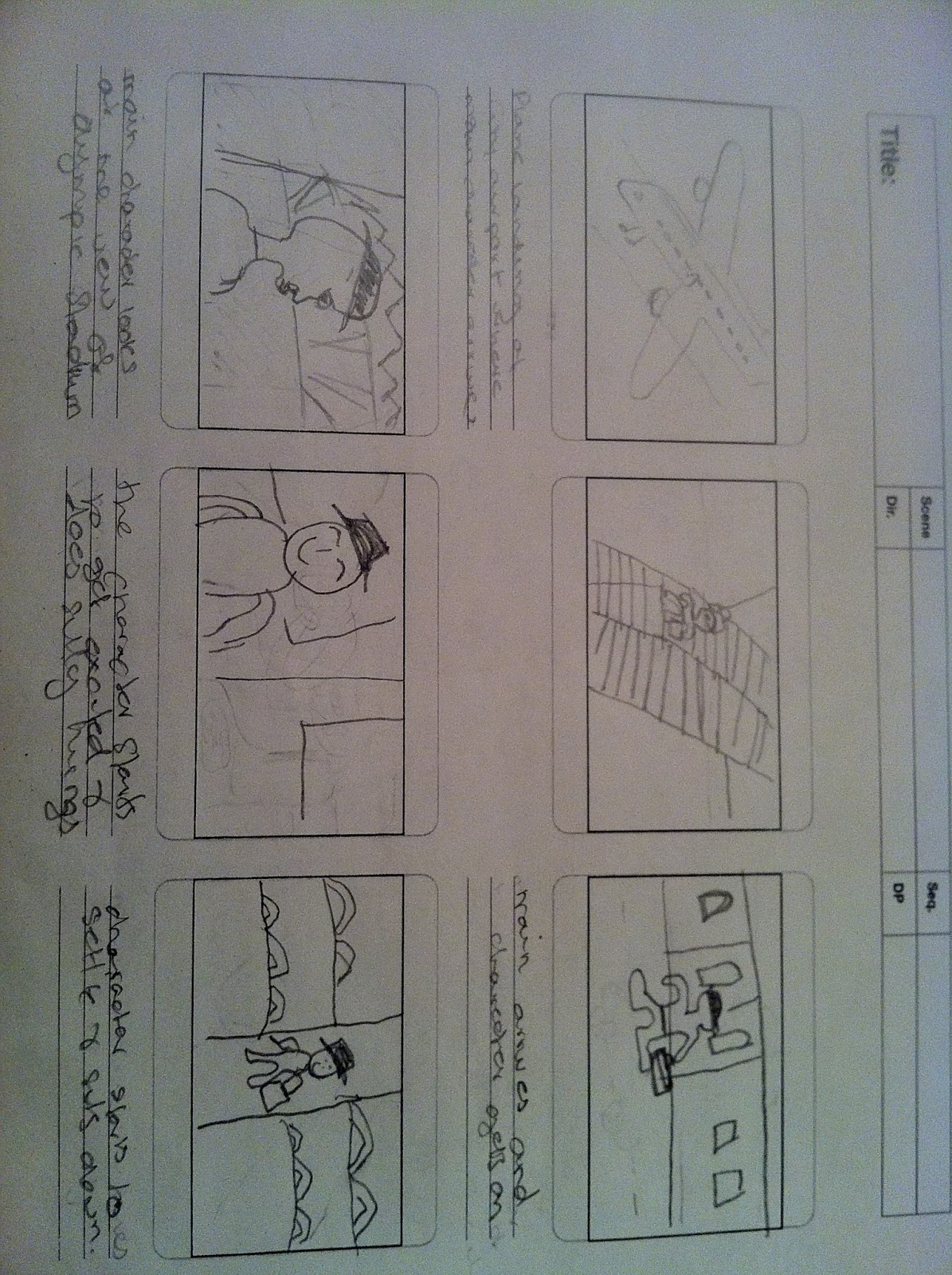
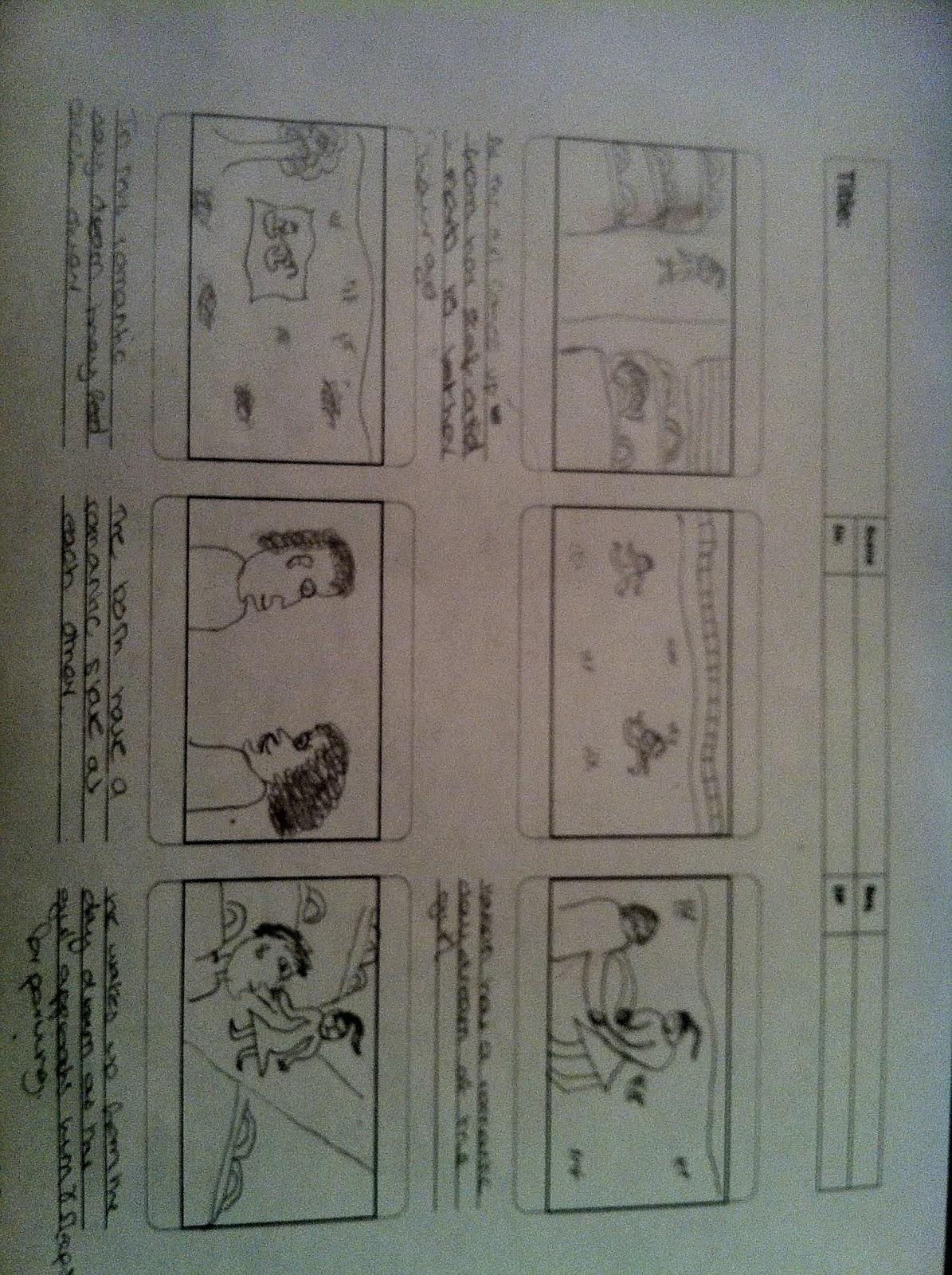
STORYBOARD

EVALUATION QUESTION 2 SLIDE ROCKET

EVALUATION QUESTION 2

In terms or imagery, we chose to use stills from our short film in our 2 print products. This is because we wanted to sell the film to the audience, and give a realistic feel to the film. In the film poster we decided to use a still of the main character in the train pressing his face against the window to symbolise a journey which refers back to the short film as it is a journey. For the magazine review we also used a still of the main character but another still from the short film in order to show another scene but also relating to the backbone of our package, comedy. Comedy is explored through the still we have used in our magazine review because the main character is making a funny face. Again, the smart Englishmen stereotype is explored here as Monty is dressed really smart with a suit and tie but the comedy side shows through the straw hat. This creates a really consistent package throughout the 3 products as it has the same locations, props and characters in the short film. For the house style, we chose to keep it similar for example the font we used at the beginning of the short film is in a sort of informal cartoon style as it is an comedy, we decided to carry this over into our film poster; again trying to sell the short film to the audience as the film is. However with the magazine review we chose to make it a bit more formal in terms of font. All three of our print products use similar content in terms of the main actor whose comedy comes from slapstick and physical humour for example the way that the character looks and dresses is iconic which refers to what the package is all about. Barthes suggested that films consist of numerous action codes and we have also included action codes into our film. An action code that we used was when the main character first arrived into the airport. The fact that the main character acts like he doesn’t know what he’s doing is an action code because it shows that he’s not from the country and he’s not familiar with his surroundings. One action code we have embedded into our film was when the guards stop Monty as he isn’t allowed in to the Olympic site as his ticket is invalid. Comedy is explored here because a very serious situation is then morphed into a comedy scene through the use of non-diegetic sound and the main characters funny faces. For tone/language, there was a funny tone to the short film which again relates back to the comedy aspect we tried to convey. However it was also mixed in with an angry tone during the security guard scene. The language of the film review is formal and high lexis. This is because I was looking at my example case studies and realised that they all had these factors in order to be more realistic and to not look professional. With regards to themes, there is a theme of love during the day dream scene. The effect of this is that is that it’s sort of a sub plot during his journey to the Olympics which we thought we could explore comedy aspects from for example at the end of the day dream Monty gets slapped. In terms of other marketing, if we were to release this package we would release trailers that portray a brief idea of what happens in the short film but doesn’t give away the whole film. We would also begin to release film posters similar to our print product stills however I think that we’d have to do a photo shoot in order to make it look professional but also to add variety to the film posters instead of having to keep using stills from our short video which would inevitably give away the film. Also, I would like to release some toys for kids for example like toy versions of the main characters clothing. This was also done in ‘Mr.Bean ‘which was a huge success and as this show played a major part in the creation of our film as it was the centre of our ideas.

Sunday, 10 March 2013

EVALUATION QUESTION 3

For us to progress any further, we needed to gain feedback from our audience in order to gain an idea of where we was at and where we needed to be in order to make our 3 products work effectively as a package. The first feedback we received was when we first pitched our short film ideas to the audience (which the link can be found on my blog). This was very helpful to us because we was thinking of embedding an African culture with our short film however as we gathered from the feedback, there were many issues concerning this. Firstly there was the issue of timing whether we can input all of these cultures and themes in the required time limit; secondly there was the issue of the audience comprehending all these stereotypes in one go, and lastly the difficulty of exploring an Asian and African culture cohabiting in the nature of our short film was proven to be harder than we actually thought. There was also much positive feedback to our film pitch as the audience really liked our ideas for example the love scene that we described to them followed by the comedy aspect we wanted to convey. We explored Asian culture through the use of music as we used an Indian soundtrack within the day dream scene. Also, the English stereotype was also explored through the use of the main characters costume being smart however we slightly tweaked this in order for it to relate back to the humour aspect of our film for example the fact that the main characters trousers are tucked into his socks. Others in in the audience feedback exercise found our ideas confusing however I think that this is because I felt that we didn’t really express our ideas clearly enough to them whereas other people found it easier to understand thus gave them an insight from our point of view. Soon during the exercise, another issue began to emerge with regards to the locations we wanted to us as the audience found it confusing of how the characters going to get to these locations and also how it’s going to work within our short film For example the airport scene where the main character arrives and the park where the daydream scene will take place. In my opinion I think it was effective for some people in the audience feedback exercise to find our ideas slightly confusing and to question our ideas because it made us think that maybe our ideas might have been too difficult for our audience to understand so it helped us to combat this issue as we thought of ways to simplify our ideas in our short film. The second audience feedback exercise for the ideas of our print products was also very helpful to us as it helped us to identify our strengths and expose our weaknesses. This was shown in the draft that we had produced of one of our print products as it gave the audience a very good idea of how we wanted our film poster to look like. We gained positive feedback from our draft poster as they thought it looked really good and thought it worked well with our main theme of comedy. The also thought it was a good idea to the use aspects from the ‘East is East’ and ‘West is West’ case studies that we have looked at for example the splash effect that shows certain images of some funny scenes that occur within the film which again sells the film for what it actually is which grabs the audience’s attention. There was also some negative feedback that we received which was the use of the tagline ‘Same Monty, Different Country’. The audience thought it was simple and straight to the point as the main character is from another country as comes to London for a daytrip however some crack were exposed in this for example, this tagline sort of gives away what happens in the film but the main concern of all was that if we used this tagline it would suggest that we have made previous films with this same character which would have made things more complicated than what they actually were. It was difficult for us to think of a new tagline for our film poster however in the end we just decided to keep it simple and go with ‘Are You Ready London? It’s’ which we as group thought worked well with the title of the film ‘Monty’s day out’. We then revisited the ‘Mr Bean’ case study that we did and thought that we could use some features that worked really well there in our poster for example a funny still of Mr Bean himself in the middle of the picture. We used this idea on the film poster and the audience thought it worked really well with the combination of the splash effects. We was told that it shows a “crazy’ day out with all sorts happening in a funny way” which we accepted as a compliment because it was what we was trying to portray. With regards to the film review, it wasn’t really completed by the time we had to present the pitch to the audience. We presented what we had at that time and explained to the best we could of what we wanted to do with the film review. The film review script itself wasn’t an issue for me to do however the issue was the stills. We had to be very critical of this as we trialled a few still images and presented it to our audience on a separate occasion for example a still of the day dream scene when the main character and the girl are holding hands portrayed a love theme which was totally irrelevant to us because our 3 products must work as a comedy package. This was helpful to us because it was the audience that suggested a suitable scene for us where the main character is eating the biscuit and its falling out of his mouth because it was one of the funniest scenes in the film and somewhat iconic. The post production feedback that we received was through the use of an online survey which basically was an online questionnaire. This was very easy to produce and was very effective because it’s straight and to the point. We generally received good feedback from this which was a success in our minds.

EVALUATION QUESTION 4 PREZI

EVALUATION QUESTION 4:


4) How did you use media technologies in the construction and research, planning and evaluation stages?

·        Technology was used from the beginning of the Media studies course through the use of ‘blogger’. This allowed us to keep track of our Media studies journey through ‘blogs’ from work that we can upload directly to the internet; It was almost like keeping an online diary. 

·        To do research, we used Google and YouTube to find any established films and case studies that have already been made for example we instantly thought of ‘Mr Bean’. I’ve been using these websites for years so navigating through them wasn’t very difficult. This gave us an idea of the kinds of location we can use followed by props.


·        We also used Google images to locate our case studies which were posters. And this gave us notions of how we could make our poster.


·        We used our college’s VLE ‘Moodle’ to download film schedules and permission slips which can be accessed virtually anywhere with internet.


·        We used a Panasonic C-HS900, a HD camera, to record our film. This gave the film clips a high quality resolution and made it much more professional rather than using standard cameras. Along with this we used the tripod in order to get steady shots without any camera shakes. This was difficult because some of our moving scenes had to be free hand so we had to re film certain scenes a number of times with minimal camera shake.


·        Once we had our raw footage from the video camera, we used an Apple iMac in order to edit our short film with a program called ‘Final Cut Pro’. We all had our input using this program with much difficulty but after the use of the help document on ‘Moodle’ we gained a grasp of and was able to understand the tools and could break up video, cut and shorten the length of certain clips to make sure it was in the length of 5 minutes, add sound effects and music, slow down certain scenes for example the day dream scene and the use of transition effects which we thought worked well in a number of scenes.


·        We used still images from our short video to use in our poster because it sells the film itself for what it actually is which rather than having a still from photo shoot which could mislead the audience.

·        Photoshop was used to make our film poster. There were many tools in Photoshop we utilized such as the magic wand tool to erase the background. We used the gradient tool to blend the images with the background. We also the blur tool to soften the edges of the images on the poster so they stick out more. This was quite alien to me and my team mates were more experienced in this sector so we decided split up the tasks. I also suggested that we use YouTube to look up some tutorial which came in quite handy to us.

·        To make our film review look very professional we utilized InDesign. This was the first time I had used this program and found it fairly straight forward. However, I soon found it difficult to align all my text boxes with the rulers and took me a whole lesson to figure out as it meant that I had to play with the length of text in each text box and continuously change the size of them.

·        When doing presentations to pitch our ideas and some planning, we also used technology through an online program from www.prezi.com. This is a free online application which allowed us to present our pitch in a quick and easy to understand manner to our audience which looked very professional at the same time.